Protection of Disaster Displaced Persons Discussed at Global Refugee Forum Progress Review 2025
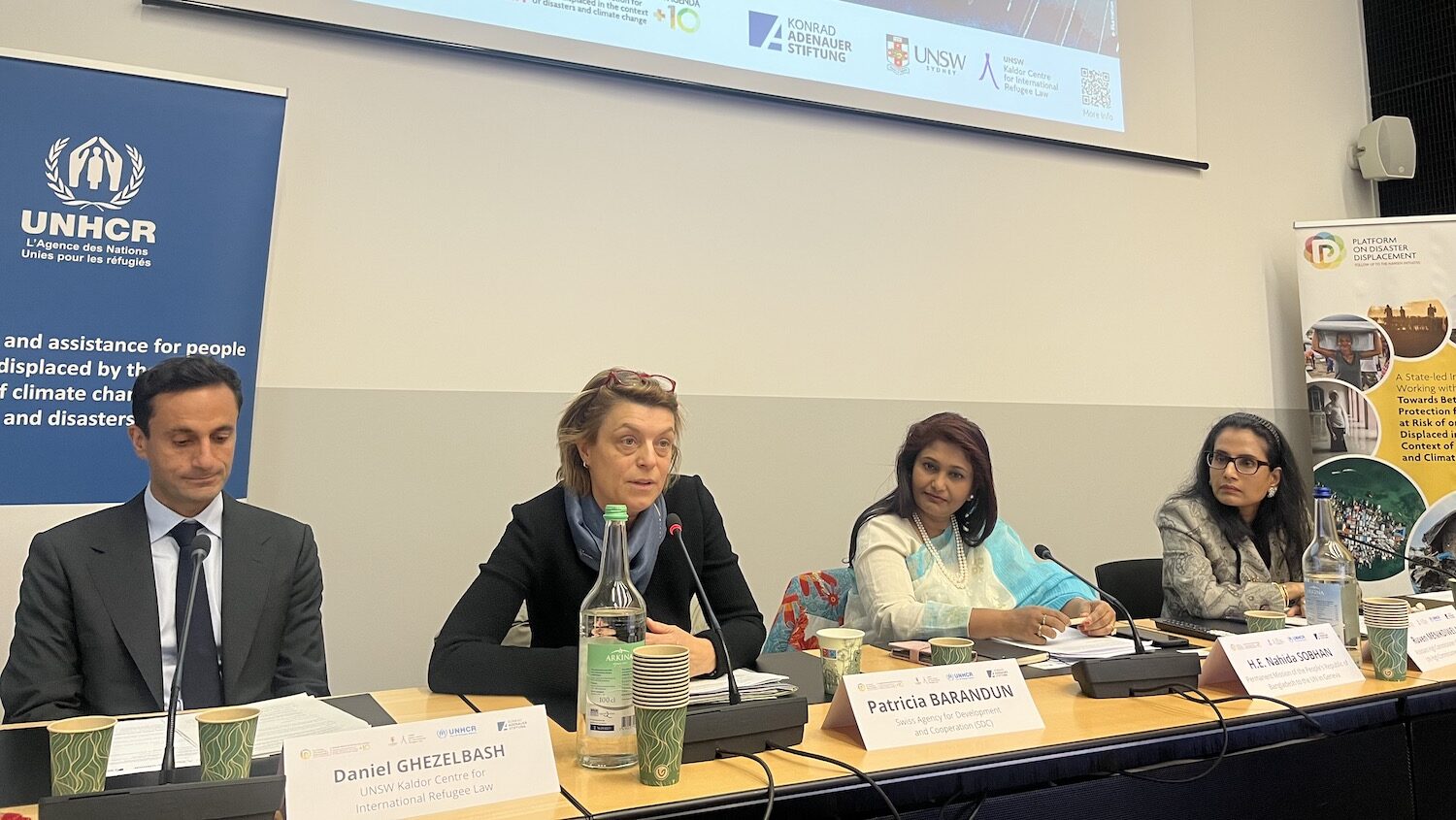
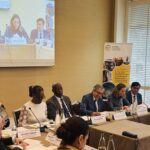
A well-attended side event on 15 December 2025 gathered representatives of States, international organizations, civil society, refugee led-organizations, academia and other partners for the Linked Event to the Global Refugee Forum (GRF) Progress Review “Commemorating 10 years of the Nansen Initiative Protection Agenda: Reflecting on legal, normative and policy developments for people displaced across borders in the context of disasters and climate change”.
Co-organized by the Platform on Disaster Displacement (PDD), the UN Refugee Agency (UNHCR), the Kaldor Centre for International Refugee Law at the University of New South Wales (UNSW), and the Konrad-Adenauer-Stiftung (KAS), the event highlighted key advances made since 2015 for the better protection of persons displaced across borders in the context of disasters and climate change at the occasion of commemorating ten years of the endorsement of the Nansen Initiative Protection Agenda.
The Linked Event was moderated by Professor Daniel Ghezelbash, Director of the Kaldor Centre for International Refugee Law. In his remarks he recalled the Global Consultation of the Nansen Initiative in October 2015 when over 100 governmental delegations endorsed the Protection Agenda. This was the culmination of a three-year consultative process that identified effective practices and built consensus on key principles and elements to address the protection needs of persons displaced across borders in the context of disasters and climate change. He emphasized the central role of the UNHCR in the process and commended the Chairmanship of the Nansen Initiative, Switzerland and Norway, for their foresight.
He stressed that the Protection Agenda was a toolkit of actions that contained effective practices to address displacement in the contexts of disasters and climate change as a multicausal phenomenon, and that it has shaped significant legal and policy developments over the past decade.
Ms. Patricia Barandun, Head of Section Migration and Forced Displacement from the Swiss Agency for Development and Cooperation, spoke on behalf of Switzerland as former Chair of the Nansen Initiative.
She called on the international community, despite the current difficult financial context, to be as visionary as her predecessors who launched the Nansen Initiative and
Keep the agenda alive in a world which is changed and where multilateralism needs a boost.
She described the climate change, displacement projections and protection challenges lying ahead and pleaded to others to follow the example of Switzerland and contribute funding to the work of the PDD to ensure continued implementation of the Protection Agenda in the years to come.
We need to walk the extra mile, she said, since the issue is there to stay and there to grow.
Ms. Ruven Menikdiwela, Assistant High Commissioner for Protection at the UN Refugee Agency recalled that the Nansen Initiative had emerged from discussions held at UNHCR in December 2011 and that States and other partners had come a long way since then regarding policy and legal developments achieving enhanced protection for persons displaced across international borders in disaster and climate change contexts. It is a fact that displacement is often multicausal and that drivers of movement and displacement are interlinked, as highlighted in UNHCR’s No Escape Report. She highlighted the landmark Advisory Opinion on Obligations of States in respect of Climate Change issued by the International Court of Justice in July 2025 and pointed to various processes at the regional level aiming to achieve better protection in the context of disasters and climate change, such as the Cartagena+40 process and the OAU 1969 Refugee Convention. UNHCR has a unique mandated responsibility to guide the interpretation and application of legal and policy frameworks relating to refugees and stateless persons, including in the context of climate change and disasters and has spelled out Legal Considerations in this regard. She concluded by linking the topic to the implementation of the Climate Action Multi-Stakeholders Pledge of the 2023 Global Refugee Forum (GRF) and called for continued solidarity, financial resources and policy solutions in a challenging global context.
H.E. Ms. Nahida Sobhan, Permanent Representative of Bangladesh spoke as former Chair of the PDD and the government that had launched the PDD at the World Humanitarian Summit in Istanbul 2016 together with Germany. Bangladesh has been an active champion country engaging on this topic, since it hosted a Regional Consultation for the Nansen Initiative in 2015 and then as Steering Group member, and Chair 2018-2019, of the PDD. As one of the countries strongly affected by disaster displacement, and in the context of the large numbers of disaster displacement globally recorded each year by the Internal Displacement Monitoring Centre, “the international community cannot afford to neglect this pressing challenge”. She said it was very important to connect different entry points in the UN System, from the Global Compacts for Migrants and on Refugees to the discussions under the UN Framework Convention on Climate Change (UNFCCC) and the Warsaw International Mechanism’s Taskforce on Displacement, drawing on available data and science such as the Intergovernmental Panel on Climate Change (IPCC).
“Climate displacement is a topic of climate justice and equity”, she elaborated, and said that it was crucial to advance and not stall, international cooperation on solutions, including donors and also least developed countries and small island developing states. On behalf of Bangladesh, H.E. Ms. Sobhan expressed a strong desire for the PDD to continue, with a project-based Secretariat, to continue to extend support to affected countries.
We just cannot allow ourselves to lose momentum.
Ms. Madeline Garlick, Chief of Protection Policy and Legal Advice at UNHCR moderated the ensuing panel discussion and Q&A session.
H.E. Mrs. Claudia Fuentes Julio, Permanent Representative of Chile gave an update on the Cartagena+40 process, the Chile Declaration and Plan of Action, as an example how regional frameworks are addressing protection of persons displaced in the context of disasters and climate change, inspired by the Nansen Initiative Protection Agenda and in line with relevant global frameworks. Regional instruments have a chance to take a comprehensive view and address intersecting vulnerabilities of persons affected by climate change and displacement, and to allow for a “predictable and equitable responsibility sharing” among neighboring countries.
H.E. Mr. Christian Guillermet Fernandez, Permanent Representative of Costa Rica and current Chair of the PDD praised the Nansen Initiative as a “very innovative and forward looking” initiative at the time and called on all States and stakeholders to join forces and continue its implementation in today’s challenging context in which it is still urgently needed. The Protection Agenda is an “exceptionally influential non- legally binding instrument” that is based on evidence and research and provides concrete tools and proven practices. He thanked Switzerland, Germany and the other donors that have supported the work of the PDD over so many years. He expressed his regret that the funding situation had forced the PDD Secretariat to let go of its staff and expressed readiness and leadership of Costa Rica to work with everyone interested in supporting the continuation of the PDD’s work.
Ms. Grace Dorong, Executive Director, Root of Generations, quoted the parting High Commissioner for Refugees, Mr. Filippo Grandi, who had opened the GRF Progress Review that same day saying that the “road to protection is rough” and pointed to the multicausality of displacement. Many of her fellow nationals in South Sudan and the region were unable to clearly pinpoint a single driver of displacement in a context where conflict and climate change interact and cause multiple and complex forms of displacement and protection needs. While recognizing that protection solutions are also complex and take time to be implemented, she demanded that displaced persons shall be “turned to, as part of the solution”.
Professor Daniel Ghezelbash, Director of the Kaldor Centre for International Refugee Law, invited attendees to familiarize themselves with the Practical Toolkit on International Protection for people displaced across borders in the context of climate change and disasters, that the Kaldor Centre’s Professor Jane McAdam and Dr Tamara Wood had developed in partnership with the Center for Gender and Refugee Studies and the University of Essex, and with the close support of UNHCR. The Toolkit provides concrete guidance about assessing international protection claims where climate change or disasters play a part, drawing on both international and regional legal frameworks. He also invited attendees to engage with the Kaldor Centre’s commemorative blog series on “Nansen Initiative +10” launched in partnership with the PDD and UNHCR, where leading experts reflect on developments and progress made in key priority areas identified in the Nansen Initiative Protection Agenda.
Voices from the audience included remarks from a representative of Norway recalling the founding of the Nansen Initiative, and an internally displaced person who said “this topic is about me” and asked participants to continue providing assistance to people in need, since “when you share what you have, you don’t lose anything, and you may save a life”.
Further resources discussed at the event include a podcast where Professor Jane McAdam and Professor Walter Kaelin, in his capacity as Envoy of the Chair of the PDD, retrace the journey from the Nansen Initiative to the Platform on Disaster Displacement and a short commemorative film produced at the occasion of the 5 year anniversary of the Protection Agenda.