Regional Consultation – Durable Solutions in Disaster Displacement Contexts
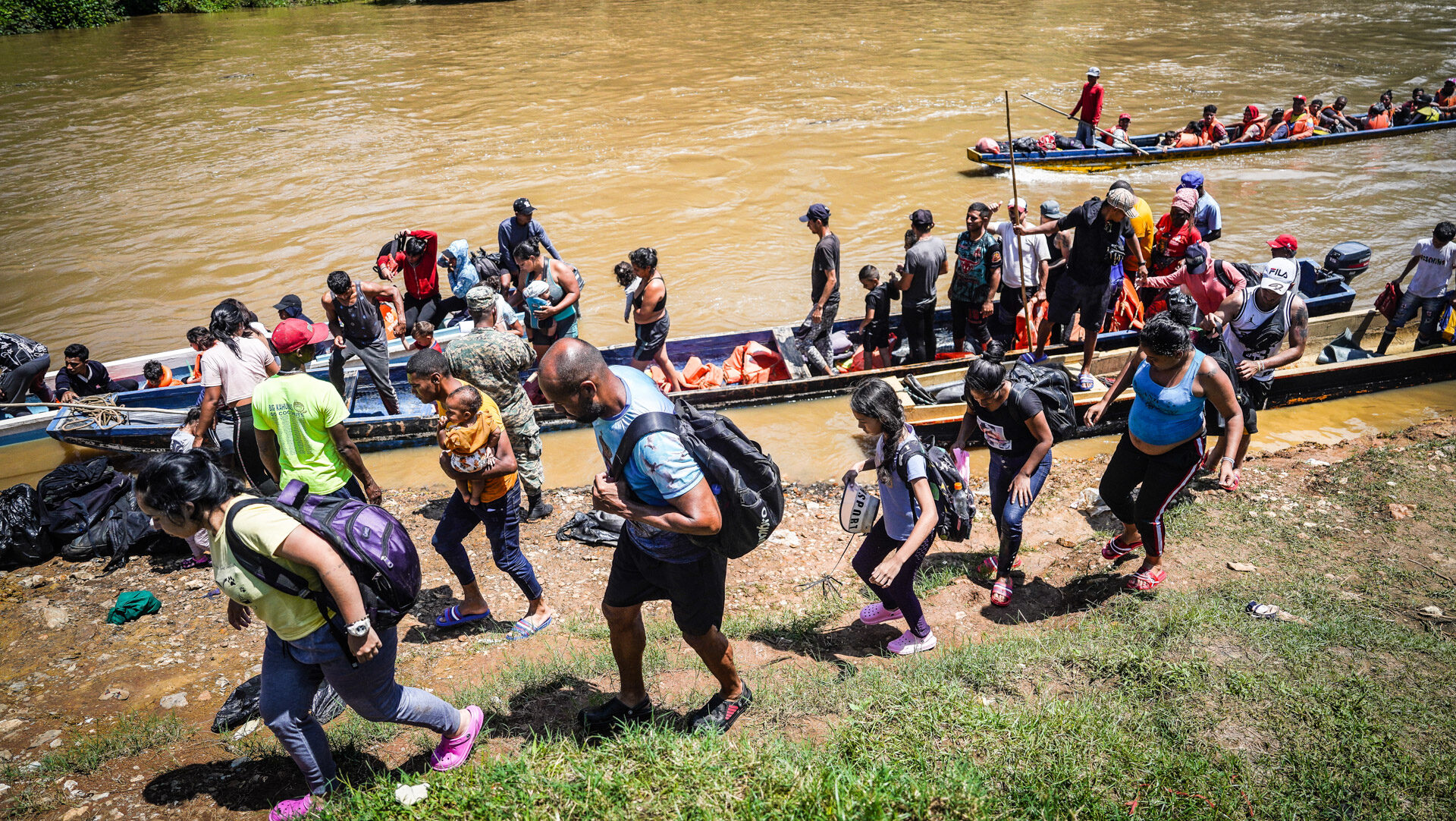
Panama City, Panama, 22-23 July 2026 – The Platform on Disaster Displacement (PDD) and the Internal Displacement Monitoring Centre (IDMC) are co-organizing this upcoming Regional Expert Consultation covering Latin America and the Caribbean. It is part of a larger project on “New Approaches and Policy Options for Durable Solutions in Disaster Displacement Contexts” implemented by the PDD and supported by Bundesministerium für wirtschaftliche Zusammenarbeit und Entwicklung (BMZ). The consultation will also support the implementation of the Chile Plan of Action 2024-2035 of the Cartagena+40 Process.
Background
Every year, millions of people are displaced in the context of disasters and the adverse effects of climate change. According to the Internal Displacement Monitoring Centre (IDMC), nearly 29.9 million new or repeated disaster displacements were recorded across 140 countries and territories in 2025, a majority of which were weather and climate-related. This is above the annual average of 24 million over the past 15 years. The Americas recorded more than 4.3 million internal disaster displacements, mostly as a result of an exceptional Pacific tsunami alert, a high-intensity Caribbean hurricane and early-onset wildfires. Pre-emptive evacuations accounted for at least 52 per cent of the total number of disaster displacements in the region, underscoring the role of early warning systems and emergency preparedness in shaping displacement patterns. If pre-emptive evacuations often represent an effective life-saving measure, it may also turn into protracted internal displacement, for instance, when areas of origin have become uninhabitable or too dangerous for human habitation.
The figure includes people who have been forced to leave their homes in the context of hydrological, meteorological and geophysical events such as earthquakes, wildfires, floods and storms, as well as slow-onset hazards such as drought. Scientific evidence confirms that climate and weather extremes are intensifying in frequency and severity, increasingly driving displacement across all regions. Without substantial progress on climate adaptation and risk reduction, the scale and complexity of disaster-related displacement will continue to grow.
Latin America and the Caribbean (LAC) experience significant internal displacement linked to disasters and the adverse effects of climate change, often intersecting with structural vulnerability, rapid urbanization, inequality, and governance challenges. In many situations, displacement becomes prolonged, and solutions remain out of reach due to barriers related to housing, land, livelihoods, access to services, protection, financing, and multi-level coordination.
While many displaced people can return following a sudden-onset disaster, others often remain in protracted displacement situations, particularly when their place of origin has seen major damage, become uninhabitable, and when extreme environmental degradation adversely affects the possibility to resume previous lifestyles, livelihoods and economic activity, or when resources to rebuild in areas of origin are lacking. The number of people internally displaced by disasters is expected to rise in the coming decades as more and more areas become uninhabitable due to the adverse effects of climate change.
Traditional approaches and policy options for finding solutions to internal disaster displacement are not set up or well prepared to meet this challenge. Internal disaster displacement is still predominantly addressed through short-term humanitarian responses rather than development and climate action. Without a transition from humanitarian measures to climate-resilient and development-oriented measures that are rights-based, government-led, community-based and long-term, it will be harder to prevent, address and resolve large-scale internal displacement occurring in the context of disasters and the adverse effects of climate change.
This Regional Expert Consultation aims to discuss and address these challenges. It is part of a larger project on “New Approaches and Policy Options for Durable Solutions in Disaster Displacement Contexts” implemented by the Platform on Disaster Displacement (PDD) and supported by BMZ (hereinafter the project). The overall aim of the project is to develop recommendations on new approaches and policy options for durable solutions in disaster displacement contexts. The project seeks to establish a better understanding of protracted disaster displacement, identify effective practices and to develop and discuss the potential of new approaches to solutions in internal disaster displacement situations. It comes at a time when the global funding crisis and the ongoing United Nations reform process require new thinking.
PDD partners for this Regional Expert Consultation with the Internal Displacement Monitoring Centre (IDMC), the global authoritative source of data and analysis on internal displacement, also a member of the PDD Advisory Committee and partner of the above-mentioned project. IDMC is currently implementing activities in Latin America and the Caribbean (LAC) as part of the project on “Enhancing prevention, risk reduction and response to disaster and climate-related displacement worldwide” funded by the Directorate-General for International Partnerships (INTPA). The project aims to reduce displacement risks and impacts through improved data and evidence, national and regional capacity strengthening and dialogues.
The Regional Expert Consultation will in particular consider and consult 2 draft documents developed as part of the PDD-led project, namely: 1) a draft Policy Paper on New Approaches and Policy Options for Durable Solutions in Disaster Displacement Contexts (hereinafter Policy Paper) and 2) a Global Study on Situations of Protracted Displacement in the Context of Disaster and the adverse Effects of Climate (Hereinafter Global Study). Participants will be invited to identify and share examples of effective practices and jointly develop recommendations on new approaches to durable solutions based on the background documents and drawing on regional experience and expertise.
The Regional Expert Consultation will also support the implementation of the Chile Plan of Action 2024-2035 of the Cartagena+40 Process. Among its objectives, the Plan aims to facilitate policy expert dialogue to review progress, identify challenges and strengthen coordination among States and key partners in addressing disaster and climate-related displacement.
Objectives
The overall objective of the Regional Expert Consultation is to convene a small group of government representatives, national and regional experts and practitioners and develop recommendations on new approaches to durable solutions in disaster displacement contexts in Latin America and the Caribbean region.
Specific objectives are:
- Present and discuss the latest data and evidence on internal disaster displacement in Latin America and the Caribbean (Global Report on Internal Displacement 2026).
- Consider and consult on findings and recommendations of the draft Policy Paper on New Approaches and Policy Options for Durable Solutions in Disaster Displacement Contexts and the Global Study on Situations of Protracted Displacement in the Context of Disaster and the adverse Effects of Climate.
- Identify challenges and effective practices on solutions in the LAC region related to data and evidence, legal and policy frameworks, institutional arrangements and coordination, and financing.
- Encourage dialogue among and with governments to generate political attention and promote peer-to-peer learning on internal disaster and climate-related displacement.
- Develop recommendations on new approaches and policy options on solutions (Outcome Document), to inform national action as well as relevant regional and international processes such as the implementation of the Chile Declaration and Action Plan 2024-2034, the United Nations Framework Convention on Climate Change (UNFCCC), and the run-up to the revision of the Sendai Framework for Disaster Risk Reduction (2015-2030) etc.
Methodology and Expected Results
The Regional Expert Consultation will consist of panel presentations and discussions in moderated plenary sessions as well as group discussions. Participants will be asked to come prepared by familiarizing themselves with relevant background documents and to be ready to share ideas and experiences, identify effective practices and present them. Recommendations and input to the outcome document will be formulated in group work and considered in plenary.
Expected results: Regional Expert Consultation Outcome Document on:
- Key data gaps and proposals to address them;
- Legal/policy/finance gaps and enabling options;
- A prioritized set of “new approaches” recommendations;
- Summary of conclusions (Outcome Document).
Participants
The Regional Expert Consultation will consist of 25-30 participants with expertise in areas of:
- Internal displacement, durable solutions, and protection approaches in disaster/climate change contexts.
- Disaster risk management, climate adaptation, housing/land/territorial planning, livelihoods and social protection.
- Data, measurement and profiling (including operational and statistical challenges).
- Legal and policy frameworks related to internal displacement, disaster risk reduction (DRR), environment, land tenure, housing, and human mobility.
Profile of participants:
- Government representatives; Academics and applied researchers with current work in the region;
- Independent experts / practitioners;
- Representatives of specialized UN entities and international, regional and national organizations.
Cover Image: © IOM Gema Cortes