Art, Policy and Partnership: Marking 10 Years of the Platform on Disaster Displacement
1 July 2026, Geneva, Switzerland – Today, the Platform on Disaster Displacement (PDD) marks 10 years since it started its work. Established to carry forward the work of the Nansen Initiative and support implementation of the Nansen Initiative Protection Agenda, PDD continues to promote cooperation to enhance protection for people displaced in the context of disasters and the adverse effects of climate change.
Every year, disasters force millions of people to flee their homes, with floods and storms accounting for the vast majority of disaster displacements. As climate change intensifies hazards worldwide, strengthening cooperation and practical protection responses remains critical.
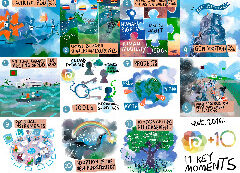
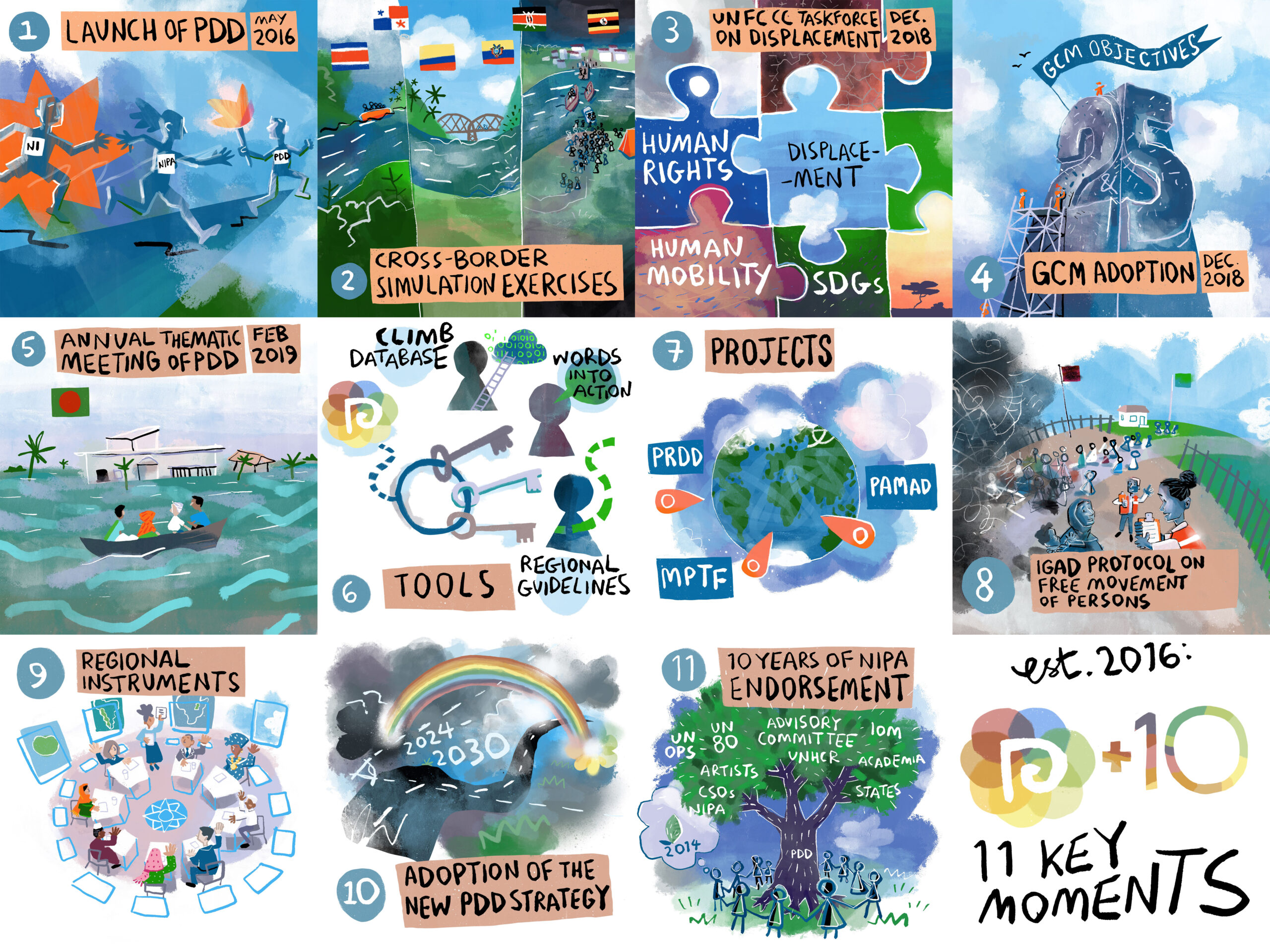
To mark this anniversary, the PDD Secretariat worked with visual artist Josh Knowles to create a series of narrative illustrations. Together, the cartoons look back at key moments in PDD’s work and point to the road ahead.
A Visual Journey Through 10 Years of Work
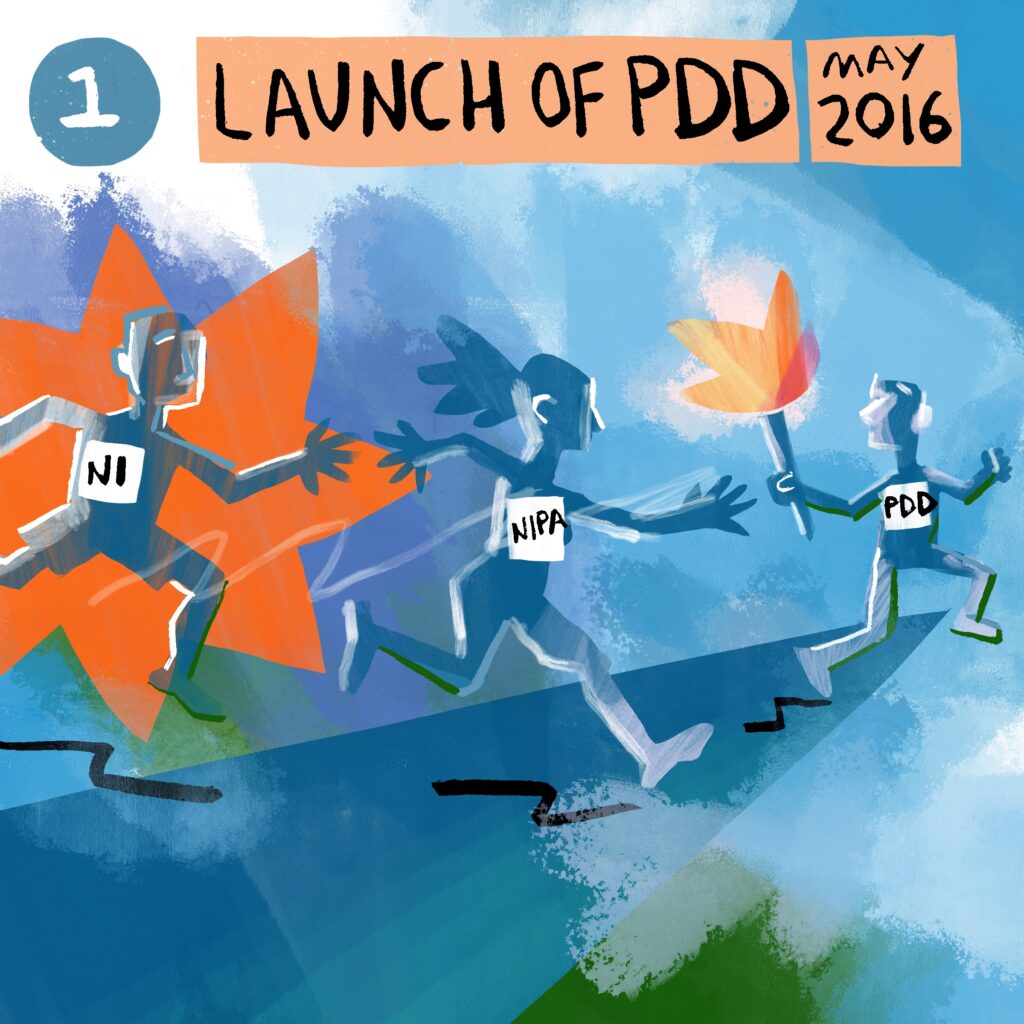
The series begins with the transition from the Nansen Initiative to PDD. Launched in 2012 by Norway and Switzerland, the Nansen Initiative helped build global consensus on the protection needs of people displaced across borders in disaster and climate change contexts. This work led to the Nansen Initiative Protection Agenda, endorsed by 109 States in 2015. In 2016, PDD was launched under the leadership of Germany and Bangladesh to help carry this work forward.
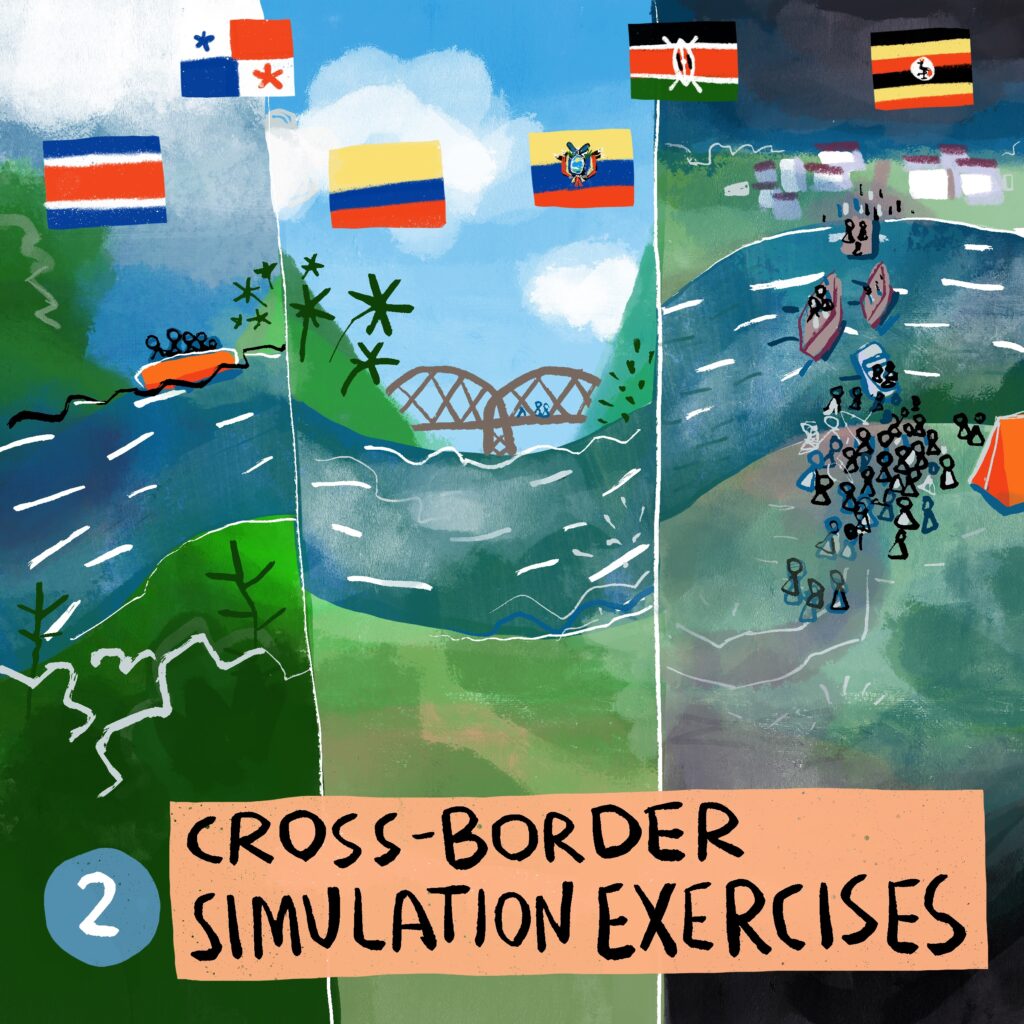
Several illustrations focus on how policy has been translated into practical cooperation and action. These include cross-border simulation exercises supported by PDD in Costa Rica and Panama, Colombia and Ecuador, and Uganda and Kenya, helping strengthen preparedness and coordination in disaster and displacement contexts.
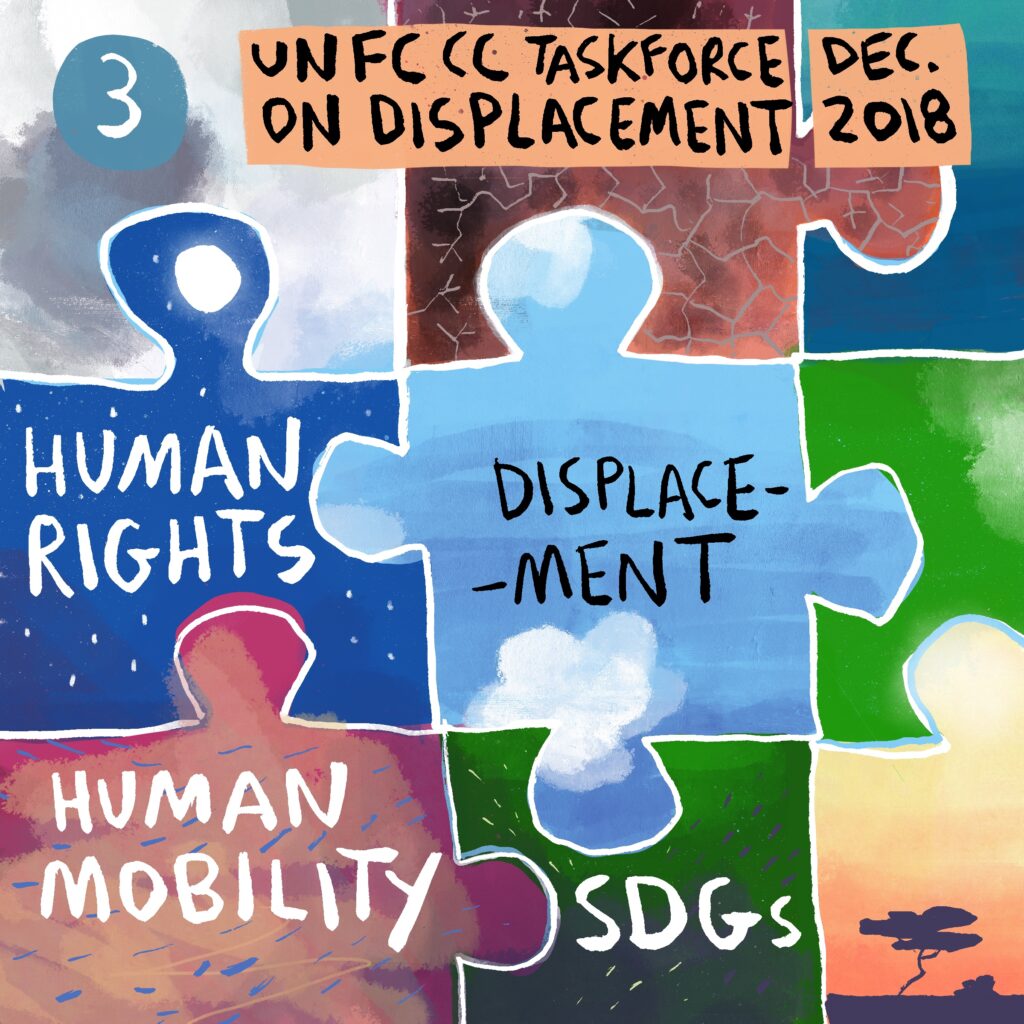

Other panels highlight important global policy developments. At COP24 in Katowice in 2018, the recommendations of the UNFCCC Task Force on Displacement were welcomed by the COP and helped strengthen recognition of human mobility challenges in climate policy, including in relation to adaptation, loss and damage. In the same year, the Global Compact for Migration reflected the work and recommendations of PDD and the Nansen Initiative Protection Agenda in Objective 2, marking an important step forward in global migration governance.
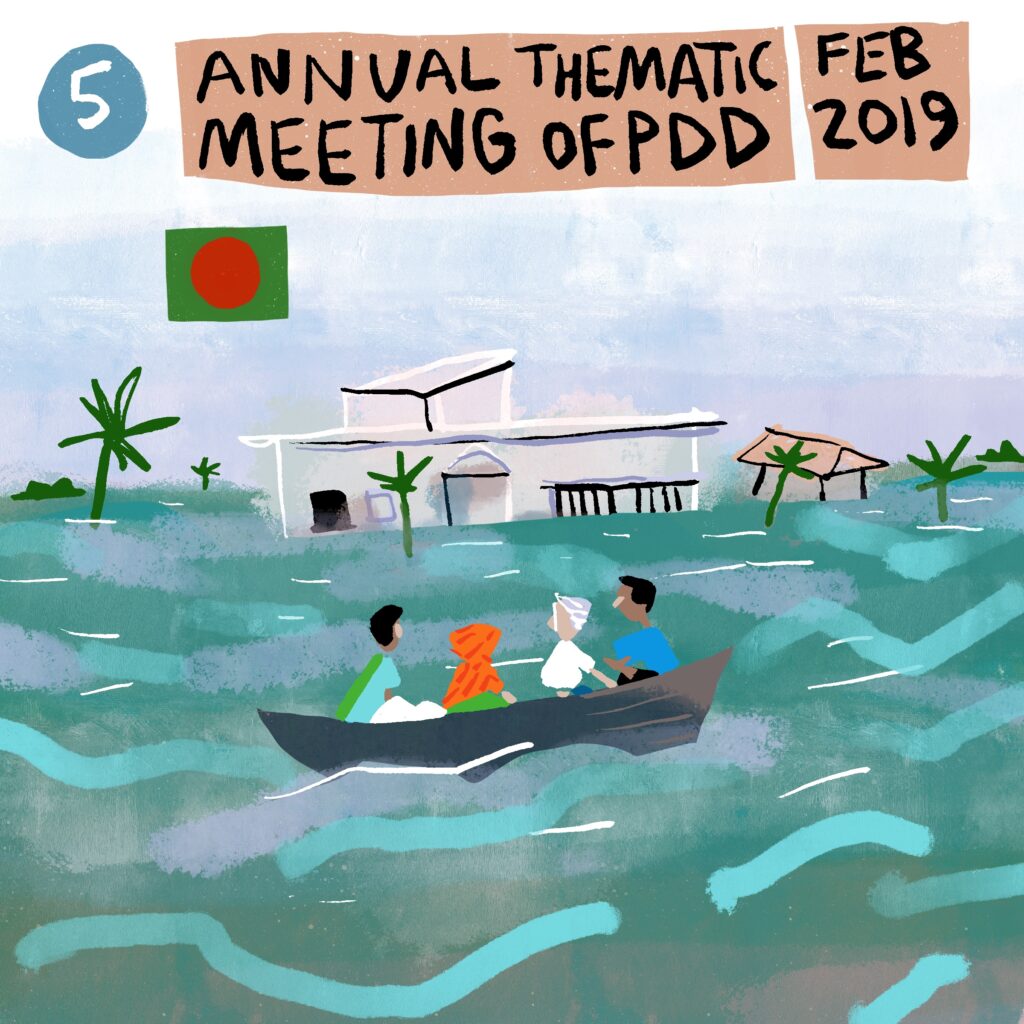
The series also reflects the importance of connecting policy discussions with lived realities. One illustration recalls PDD’s 2019 Annual Thematic Meeting in Dhaka, Bangladesh, where participants examined the impacts of floods, riverbank erosion and other hazards on communities and infrastructure.
Tools, Projects and Regional Approaches
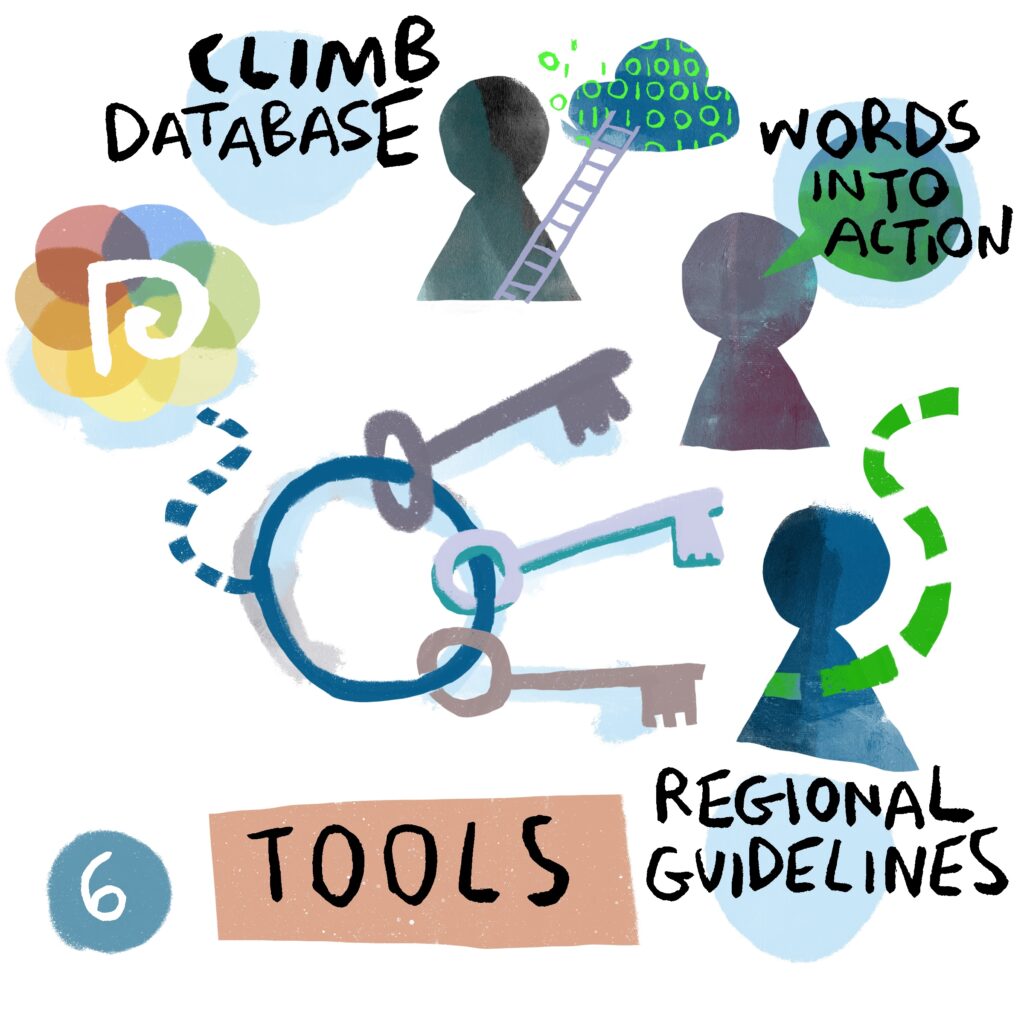
The cartoons also show how PDD has worked with States and partners to support practical tools and approaches. These include the South American regional guidelines on protection for people displaced across borders in disaster situations, the Words into Action guidelines on disaster displacement, and the CLIMB Database, which brings together national laws, policies and instruments related to climate change and human mobility.
Another illustration presents key multi-partner initiatives, including work in the Pacific, the IGAD region, and through PAMAD, the Project to Avert, Minimize and Address Disaster Displacement. These efforts support work on data, risk assessment, planning and access to finance, including in the context of loss and damage.

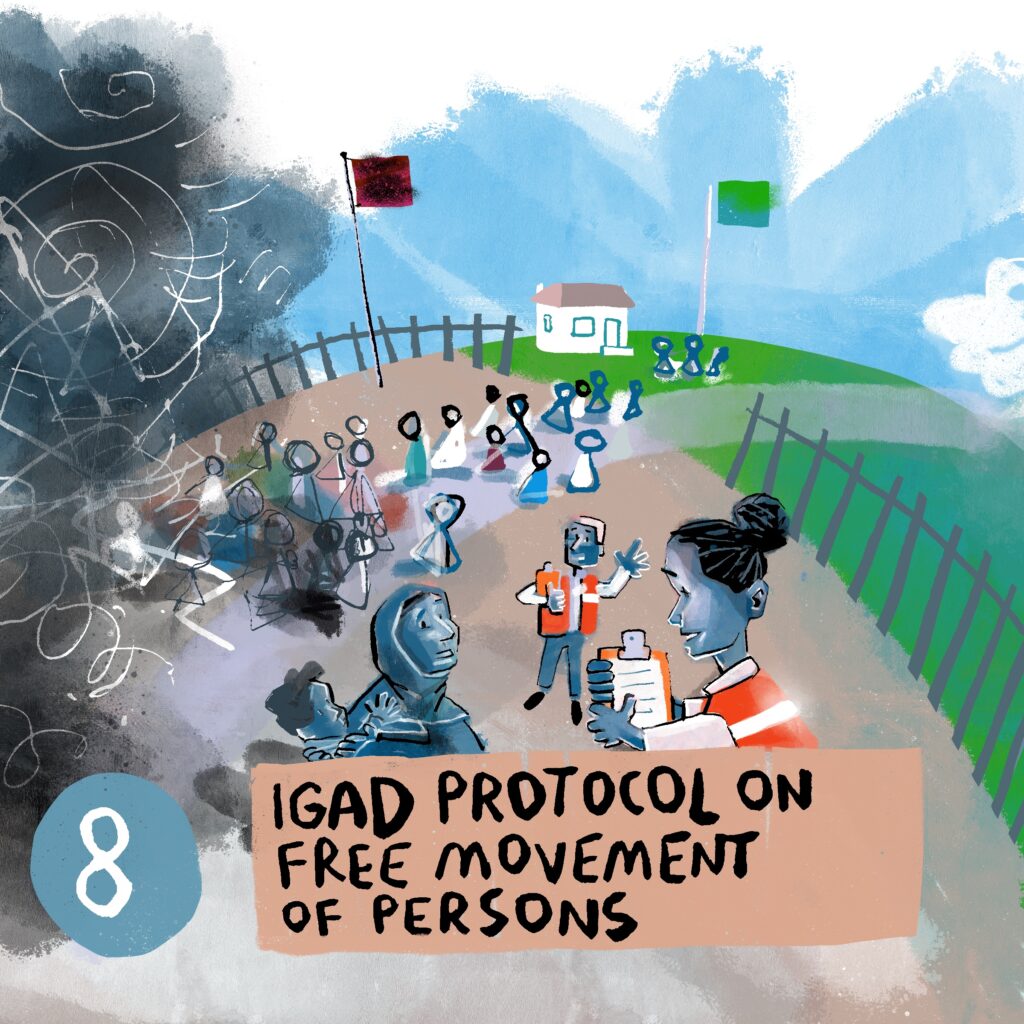
Regional cooperation is another central theme. The illustration on the IGAD Protocol on Free Movement of Persons shows how cooperation between neighbouring countries can support safer, more predictable and protection-oriented responses when people move across borders in disaster contexts.
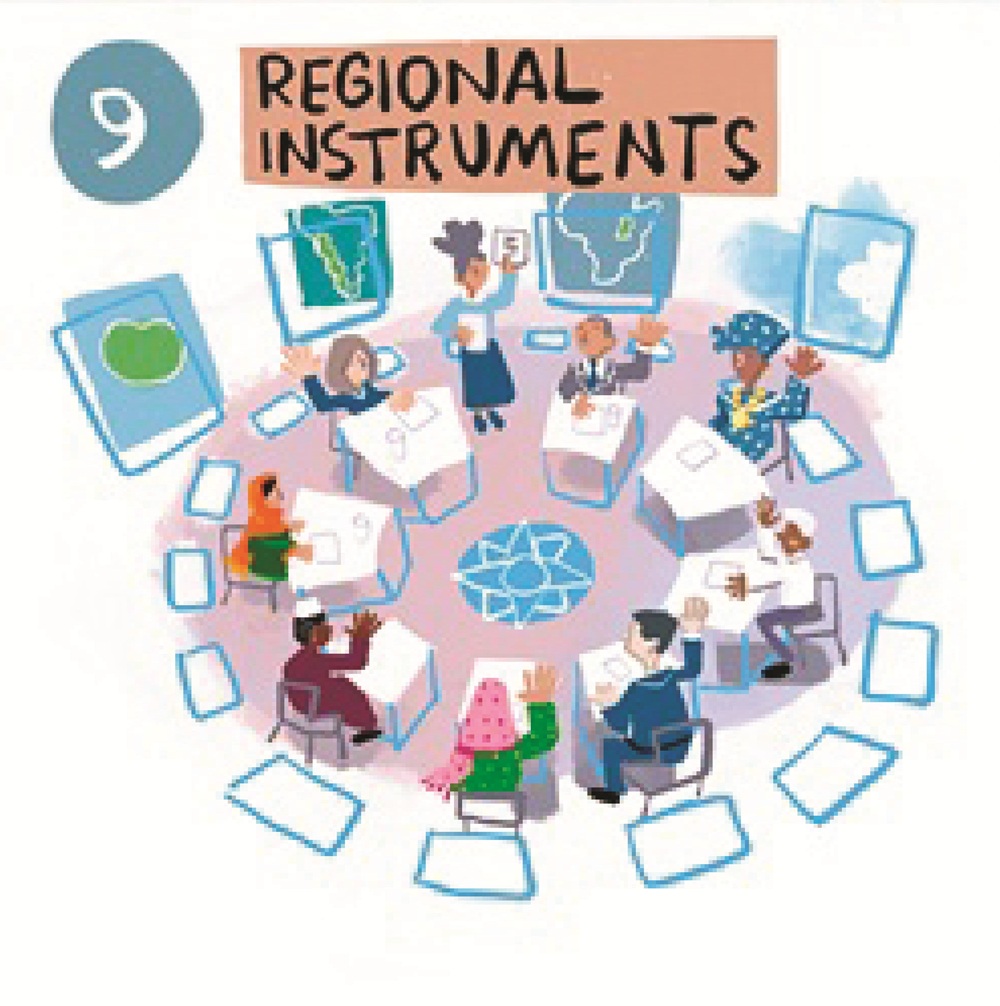 Other panels highlight regional instruments such as the Pacific Regional Framework on Climate Mobility, the Chile Declaration and Plan of Action 2024–2034, and the Pacific Guidance on Internal Planned Relocation. Together, these instruments support more practical and context-specific approaches to protection.
The Road to 2030
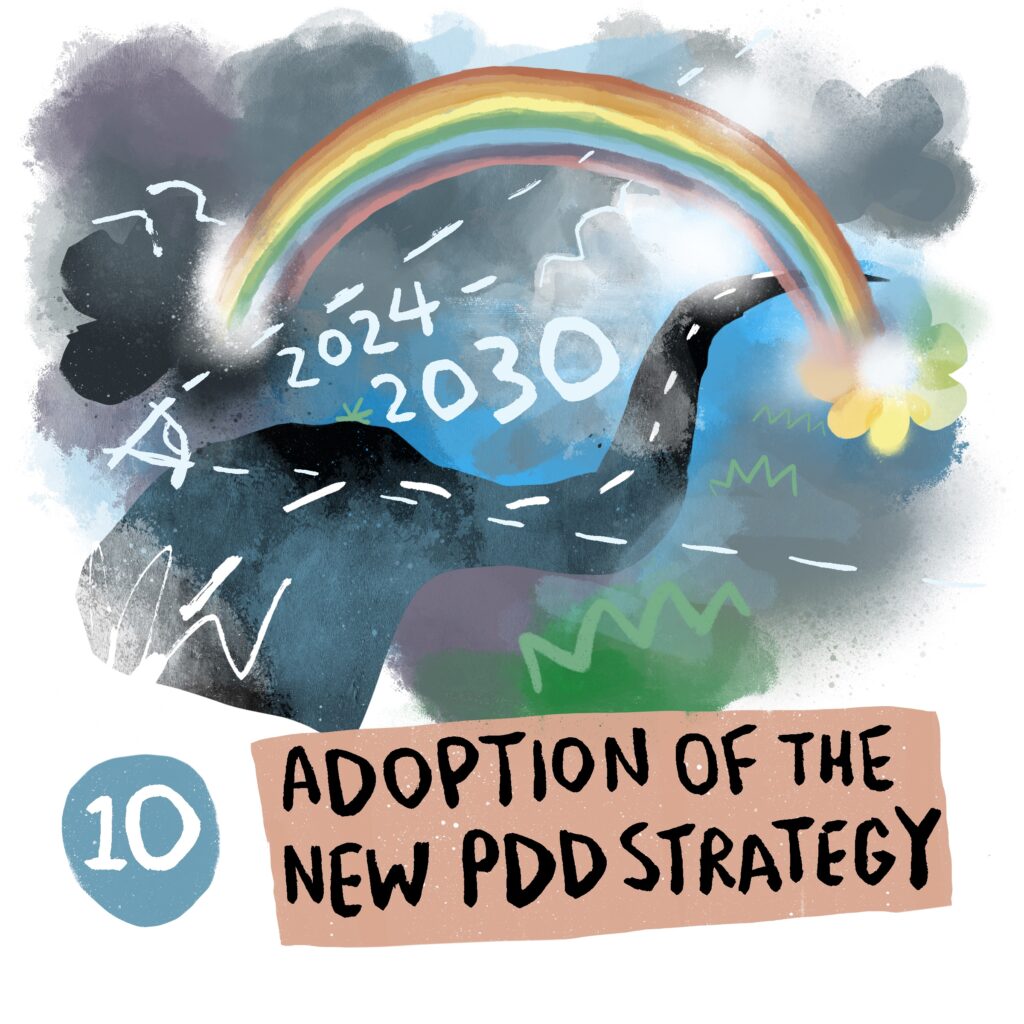
The final illustrations look ahead.
The PDD Strategy 2024–2030 sets out the Platform’s priorities through to 2030, building on the Nansen Initiative Protection Agenda and aligning PDD’s work with relevant international processes, including the 2030 Agenda for Sustainable Development.
The Strategy is organized around three strategic priorities: enhancing the implementation of measures to protect cross-border disaster-displaced persons; strengthening the management of disaster displacement risk in climate change action, disaster risk reduction and sustainable development; and enhancing public policies on internal disaster displacement and planned relocation.
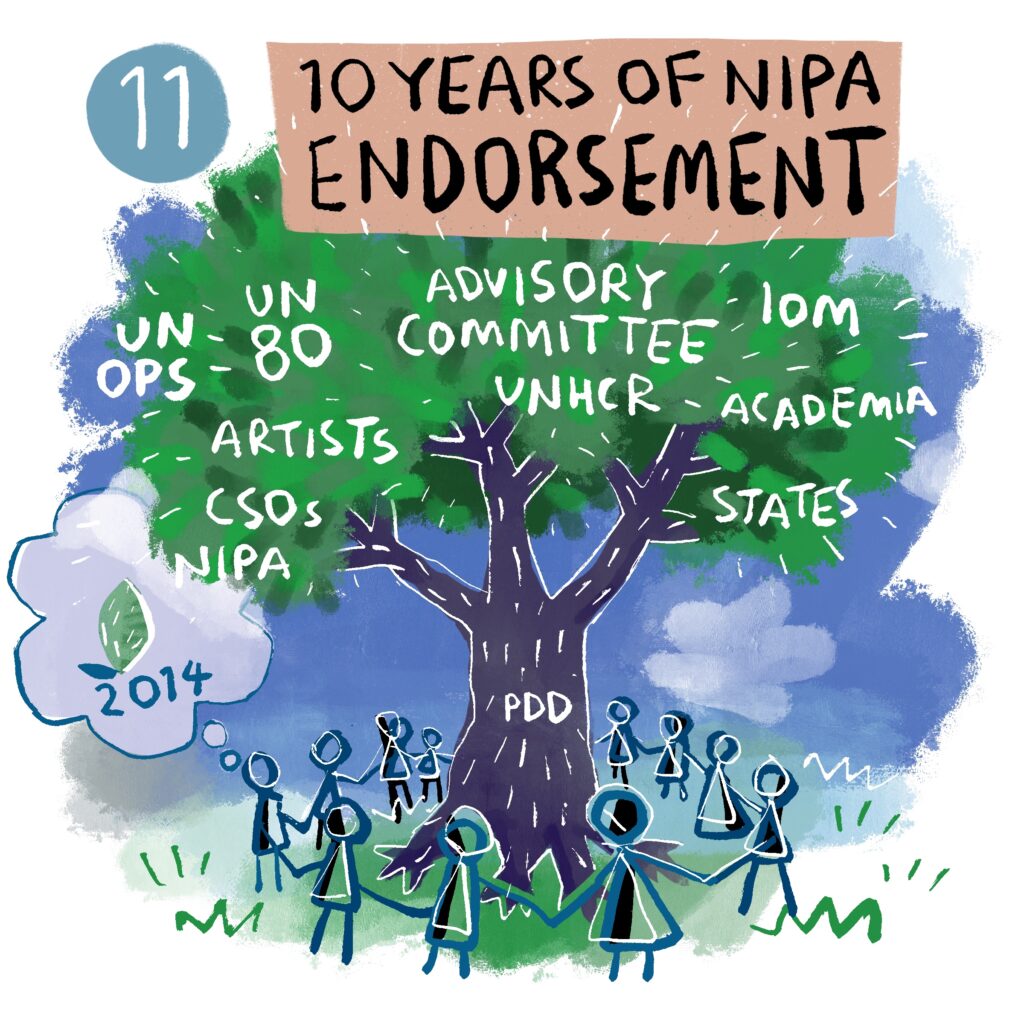
The final illustration brings the wider PDD network to life. Rooted in the Nansen Initiative and the Protection Agenda, the tree reflects a decade of cooperation among States, regional organizations, IOM, UNHCR, the UNOPS-hosted Secretariat, civil society, academia, artists and other partners.
It is also a reminder that disaster displacement cannot be addressed by one actor alone. Continued cooperation remains essential to strengthen protection, reduce risks and support people displaced or at risk of displacement in disaster and climate change contexts.
About the Artist
The illustrations featured in this anniversary series were created by Josh Knowles, a cartoonist and live-drawing artist who has worked with PDD for several years. Through real-time illustration and visual storytelling, Josh helps make complex socio-political and environmental issues more accessible and engaging.
Explore more of his work: joshknowles.co.uk/illustration/