Regional Exchange Advances Collective Action on Climate Mobility and Planned Relocation in the Pacific
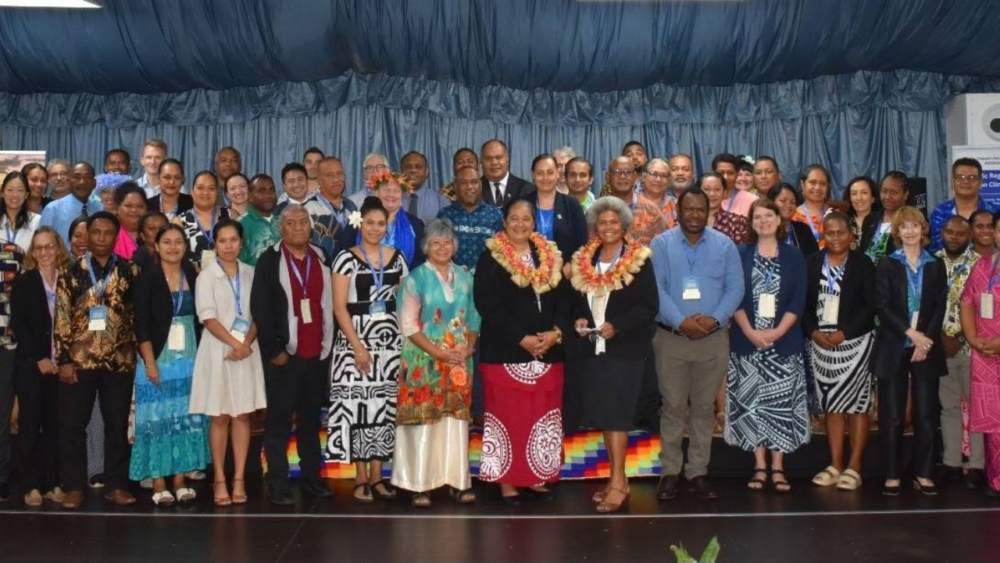
The three-day exchange focused on advancing the Implementation Plan (2025–2030) of the Pacific Regional Framework on Climate Mobility (PRFCM). Officially opened by Fiji’s Assistant Minister for Foreign Affairs and External Trade, Hon. Lenora Qereqeretabua, the event highlighted the importance of “ownership and trust” in addressing climate mobility as a core concern for human security and regional stability in the Pacific.
In her remarks, Hon. Qereqeretabua acknowledged the Government of Tuvalu for its partnership and the collective support of the Joint Working Group (JWG) secretariat and Pacific Climate Change Migration and Human Security Programme (PCCMHS) partners in drafting the Regional Framework and finalizing an Implementation Plan 2025-2030.
Planned Relocation as Priority Area of Action
A primary milestone of the Regional Exchange was the official launch of the Pacific Guidance on Internal Planned Relocation (PGIPR). This document directly responds to commitments under the PRFCM to develop regional guidelines that ensure the dignity, rights, and cultural identity of communities are protected when relocation becomes a necessary adaptation or disaster risk measure of last resort.
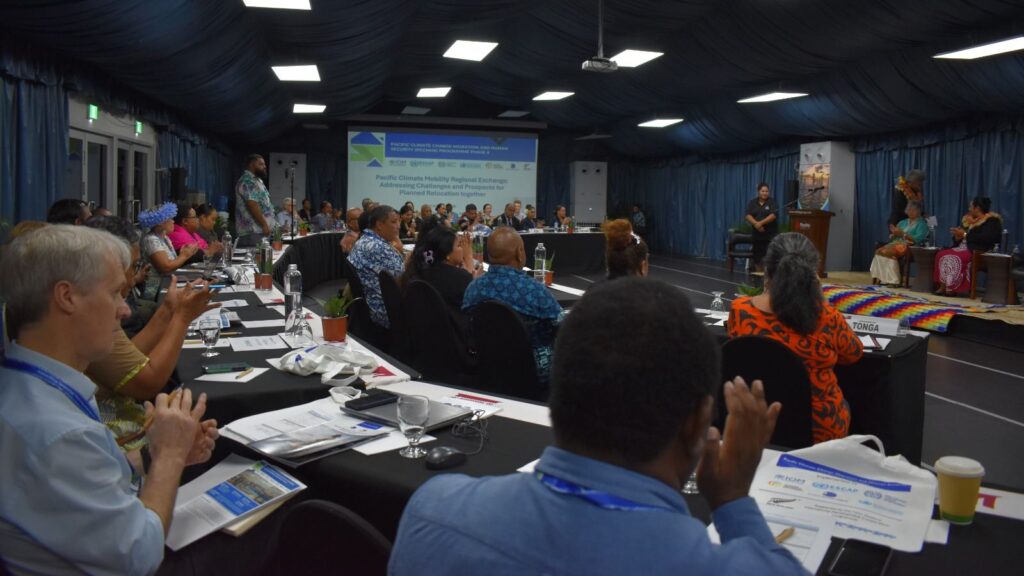 The Platform on Disaster Displacement (PDD) and its Secretariat participated as a technical partner under the Pacific Climate Change Migration and Human Security (PCCMHS) Programme Phase II since 2023 alongside partners such as UNESCAP, IOM, ILO, OHCHR, and the Pacific Islands Forum Secretariat (PIFS). Together with IOM, the PDD has coordinated and lead the the technical development of the new Guidance on Planned Relocation. Going forward, PDD’s involvement remains centered on supporting Pacific Member States as they transition from policy development to the practical implementation of these regional instruments, tools and guidance, ensuring that the protection of disaster displaced persons remains a priority within the regional policy architecture and relevant Implementation Plans.
As the region moves toward the 2027 goal of full implementation, these partnerships remain important to translating high-level policy into concrete, rights-based action on the ground.
Photos: Fiji Government/Facebook