Overview and Background
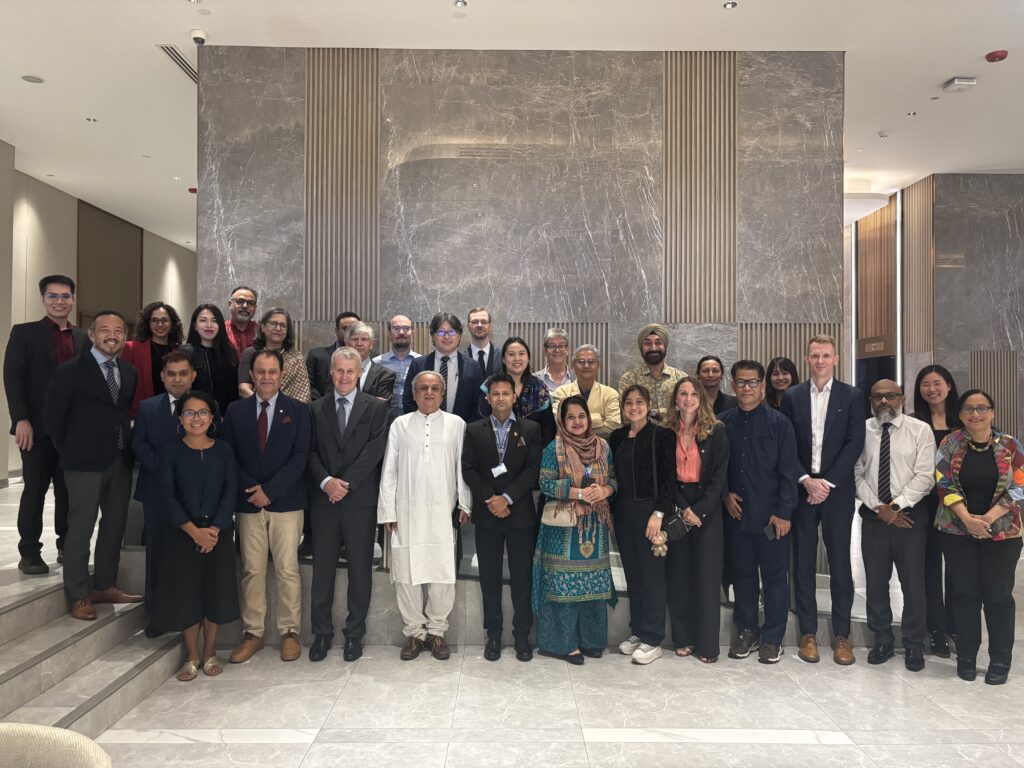
Following the regional dialogue held in Panama, PDD and IDMC brought together regional government officials, humanitarian practitioners, and researchers to address post-emergency recovery realities across Asia and the Pacific. The scale of mobility in the region is severe: in 2025 alone, East Asia and the Pacific recorded 17.5 million disaster displacements, while South Asia recorded another 4.6 million.
The consultation focused on addressing the gap that emerges when the physical disaster ends but displaced populations remain unable to rebuild their lives. Participants examined the limitations of existing disaster statistics, the requirements for achieving equitable recovery, and the policy mechanisms required to embed durable solutions into national public budgeting, development planning, and climate adaptation investments.
Key Findings and policy options
- Moving Beyond Counting to Longitudinal Tracking: Disaster displacement does not conclude when emergency relief concludes. Data collection systems from the Philippines, Malaysia, and Bangladesh demonstrated that tracking displaced populations outside official camps is essential to reveal prolonged displacement situations that remain institutionally invisible.
- Displacement Justice & Territorial Belonging: Recovery is fundamentally a question of rights, equity, and land tenure. As emphasized by Mihir Bhatt (All India Disaster Mitigation Institute), “a warning without the means to act is not equitable protection.” Relocation and return planning must respect land attachments, replace lost livelihoods, and protect marginalized groups.
- Building Pre-Disaster Foundations & Cumulative “Durable Gains: Durable solutions must be planned prior to hazard onset through early warning, anticipatory action, and local institutional investments. In Bangladesh, women safeguarding agricultural seeds ahead of seasonal floods demonstrated the effectiveness of community-led risk reduction. The consultation affirmed that solutions are achieved through incremental durable gains—such as restored schooling, continuous healthcare access, and renewed income sources.
- Innovative Financing & Parametric Mechanisms: Financing instruments often exist within development banks and climate adaptation funds, but displacement is rarely tagged as a priority within national expenditure plans. The consultation examined SEADRIF’s #PEOPLE parametric insurance mechanism in Lao PDR, which triggers payouts based on government-verified numbers of affected people rather than asset damages alone, illustrating how displacement data can unlock contingency funding rapidly.
- Systemic Institutional Reform: As summarized by Prof. Walter Kälin, Envoy of the Chair of the PDD: “Government systems need to be revamped so that they really can integrate displacement and solutions into what they do.”
With The Generous Support Of:
Federal Ministry for Economic Cooperation and Development (BMZ) | Deutsche Gesellschaft für Internationale Zusammenarbeit (GIZ) | European Union (EU)