Webinar on: the Treaty on the Protection of Persons in the Event of Disasters
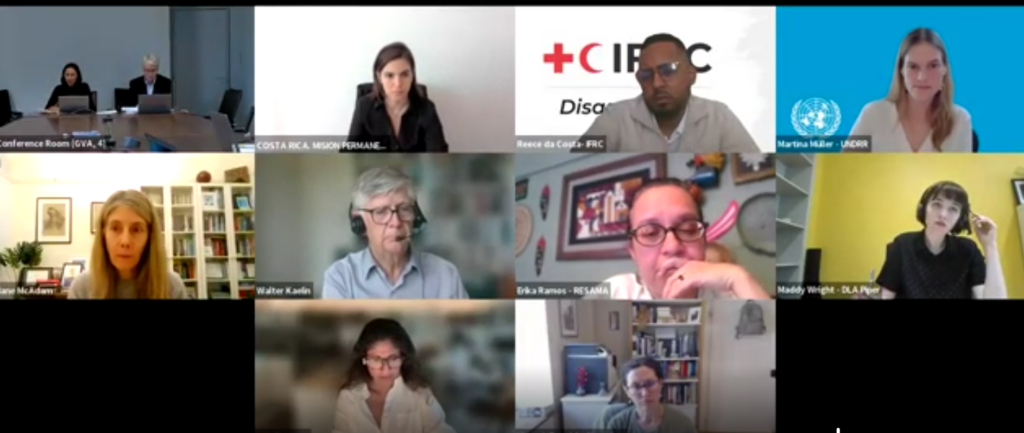
2 July 2026, Virtual – The Platform on Disaster Displacement (PDD), the Kaldor Centre for International Refugee Law (Kaldor Centre), and the South American Network for Environmental Migrations (RESAMA), in collaboration with the International Federation of Red Cross and Red Crescent Societies (IFRC), convened a virtual webinar on the proposed Treaty on the Protection of Persons in the Event of Disasters (PPED Treaty). The event brought together more than 65 participants from the PDD Advisory Committee, United Nations (UN) and international organisations, academia, civil society and a range of other practitioners and stakeholder groups.
Overview and Purpose
In 2024, the UN General Assembly decided to elaborate and conclude a legally binding treaty by the end of 2027, based on the International Law Commission’s 2016 Draft Articles on the Protection of Persons in the Event of Disasters (ILC 2016 Draft Articles). The proposed PPED Treaty aims to strengthen international cooperation, clarify the responsibilities of States and other relevant actors, and enhance the protection of persons affected by disasters.
Since the decision to elaborate a treaty, States and stakeholders have held discussions and submitted written proposals to refine the draft text. States were invited to submit proposals for amendments by the end of 2025, which were considered during a session of the dedicated Working Group of the Sixth Committee in early April 2026. A second deadline of 15 May 2026 was established for additional submissions. Consolidated compilations of submissions received by both deadlines are available, with 45 submissions received as of June 2026, including several joint submissions.
The next milestone is a Preparatory Committee meeting in New York from 31 August to 4 September 2026 to establish modalities and procedures for the Diplomatic Conference expected in early 2027, where the PPED Treaty will be negotiated and potentially adopted.
Convened as a follow-up to the March 2026 Technical Briefing, this webinar provided an update on the process and explored the treaty’s scope, opportunities, and key considerations for international cooperation. Particular attention was given to the treatment of displacement and the protection of displaced persons in the evolving draft text across disaster prevention, preparedness, response, and recovery.
The webinar was opened by Ms. Natalia Bolaños Espinosa, Minister Counsellor at the Permanent Mission of Costa Rica to the UN in Geneva and Chair of the PDD, and co-moderated by Mr. Atle Solberg (PDD Secretariat) and Ms. Sanjula Weerasinghe (Kaldor Centre).
Summary of Presentations and Exchange
The webinar:
- provided an overview of State submissions as well as a discussion of the roles of the Core Group of Member States and the Bureau in guiding and facilitating the PPED Treaty process
- emphasized the importance of, and strong interest among participants in, staying informed about the scope, status, timeline and latest developments relating to the PPED Treaty process
- explored the reasons for, and opportunities to, explicitly integrate references to displacement, evacuations and planned relocation within the PPED Treaty text, and highlighted State submissions relating to displacement
- explored challenges relating to the participation of, and consultation with, disaster-affected populations, grassroots communities and civil society organisations in intergovernmental processes, emphasising the need for more inclusive and accessible mechanisms for engagement
- emphasised protection gaps and challenges across the disaster management cycle, including the distinct vulnerabilities and protection needs of non-citizens, internally displaced persons (IDPs) and other vulnerable and marginalised groups
- identified avenues for continued engagement, information-sharing and advocacy as the PPED Treaty process moves forward
Ms. Natalia Bolaños Espinosa (PDD Chair / Costa Rica) highlighted the growing human and economic impacts of disasters under global warming, citing recent IDMC data, and reaffirmed PDD’s strategic priority to strengthen protection for displaced persons in the treaty.
Ms. Martina Müller (UNDRR) noted the treaty’s historical background following the 2004 Indian Ocean tsunami and emphasized its unique opportunity to enshrine disaster risk reduction, humanitarian personnel protections, and external assistance facilitation into binding international law.
Dr. Reece da Costa (IFRC) stressed adapting disaster frameworks to diversifying actors and cross-border disasters in Africa, advocating for clear legal preparedness, explicit recognition of the auxiliary role of National Societies, and noting IFRC’s proposal to serve as the treaty’s technical advisory body.
Prof. Jane McAdam (Kaldor Centre, UNSW) highlighted that while disasters accounted for almost 70% of new global internal displacements in 2024 (46 million), displacement is barely mentioned in the draft text. She outlined specific proposals to integrate displacement into the preamble, Article 5 (human rights), Article 8 (evacuations and visas as international cooperation), and Article 9(2) (evacuations and planned relocations as DRR).
Dr. Erika Pires Ramos (RESAMA) pointed out a significant gap in the direct participation of disaster-affected populations across urban, rural, and indigenous contexts, calling for more inclusive mechanisms beyond a response-heavy focus.
Ms. Amali Tower (Climate Refugees) emphasized including people with lived experience, drawing on the community-led “Weather Mtaani Leaders” initiative in Kibera, Nairobi, Kenya, to illustrate how local expertise addresses information gaps.
Prof. Walter Kaelin (PDD Envoy) discussed expanding the general ILC 2016 draft articles using practical operational experience, addressing gaps in the recovery phase, and advancing PDD’s “toolbox approach” across the disaster cycle (helping people to stay, helping people to move, and protecting those already displaced).
Conclusion
Following the panel presentations, participant exchanges highlighted critical themes to address as the PPED Treaty process moves toward the Diplomatic Conference:
- Inclusion of Affected Populations: Ensuring meaningful participation and inclusion of persons with lived experience of displacement.
- Stakeholder Engagement: Structuring the accreditation process for civil society organisations and other stakeholders ahead of the Diplomatic Conference.
- Intergovernmental Leadership: Following the work and deliberations of the Core Group of Member States and the 10-member Bureau.
- Textual Negotiations: Tracking the status of written submissions and the integration of late State submissions into official compilation documents.
- Protective Scope: Clarifying the overall scope of the PPED Treaty to ensure comprehensive protection for non-citizens, including migrants.
Participants and organizers identified these areas as key priorities for continued advocacy, information-sharing, and sustained engagement leading into the Preparatory Committee meeting in New York.
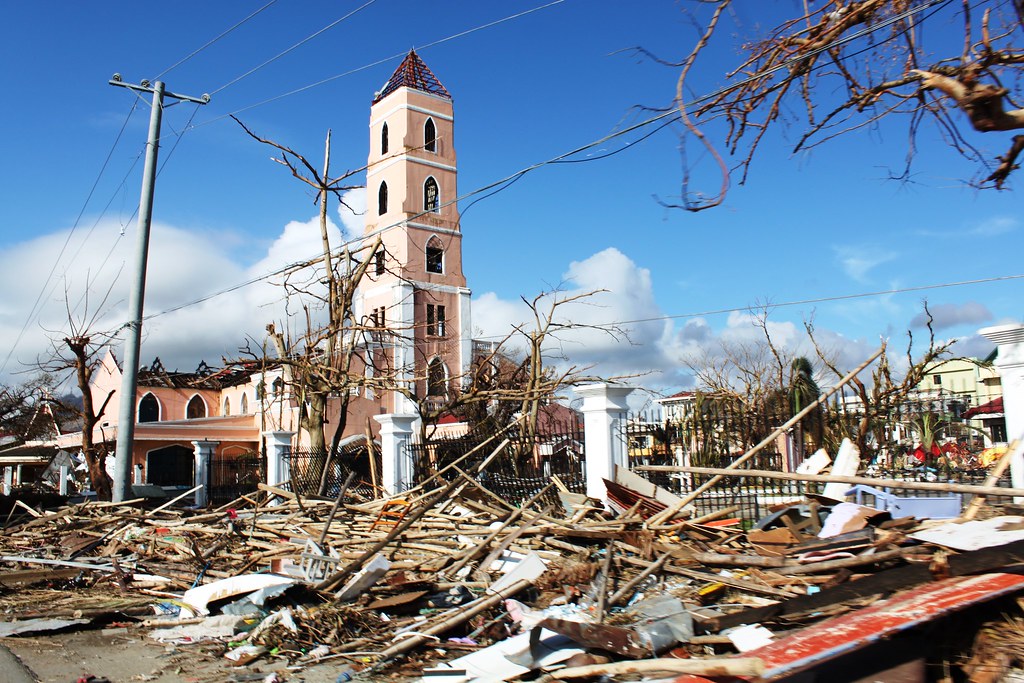
Cover Image: © IOM 2013 (Photo by Joe Lowry)



 Reload document
  Open in new tab